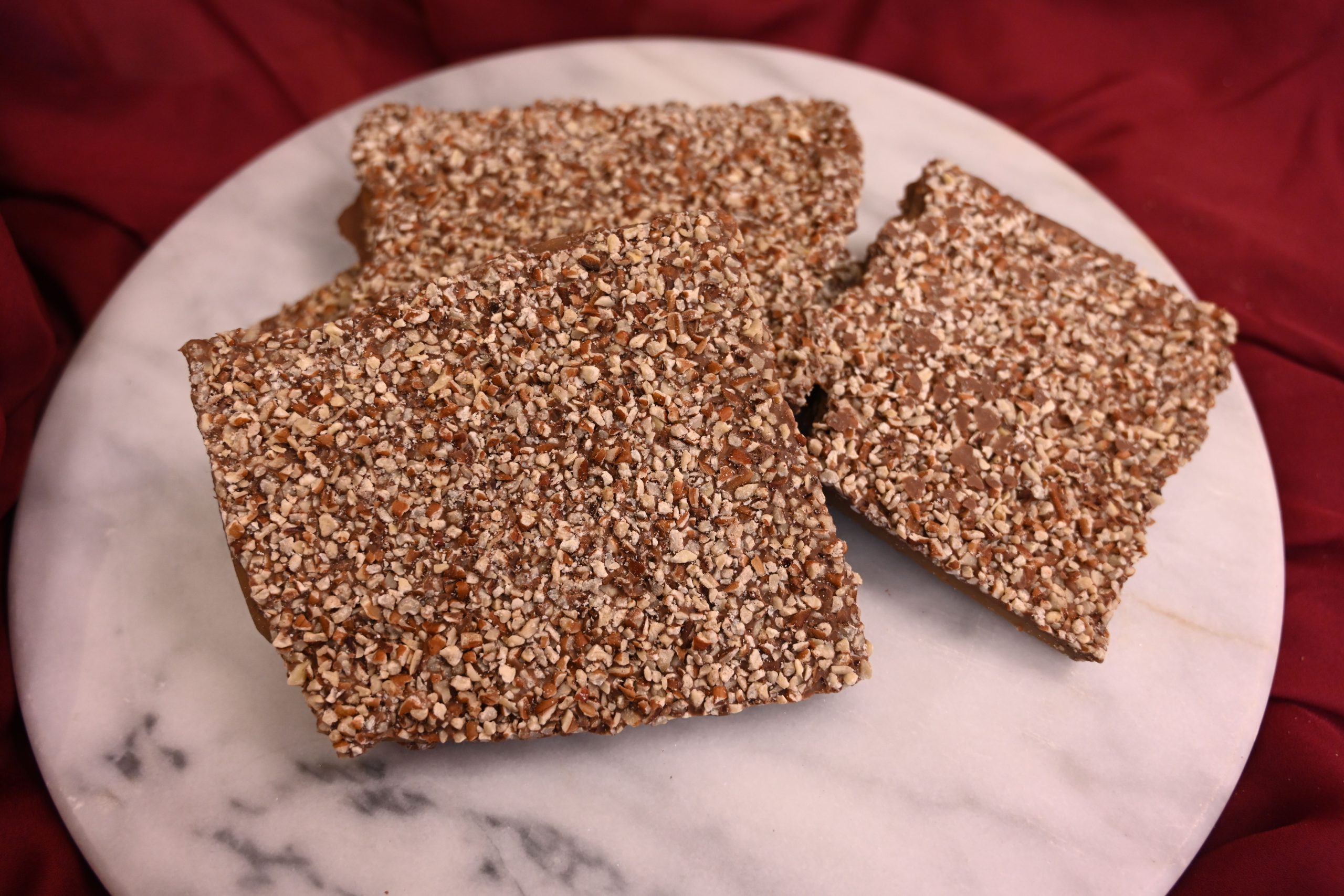
English toffee turns soft when it absorbs moisture from humid air or is exposed to excessive heat. Moisture makes the cooked sugar structure less brittle, while warmth can soften the buttery toffee and melt its chocolate coating. To keep each piece crunchy, store it in an airtight container in a cool, dry place, away from sunlight and temperature fluctuations. Knowing how to store English toffee properly helps preserve its crisp texture, rich buttery flavour, and chocolate finish. Belgian Chocolatier Piron offers English Toffee that can be enjoyed at its best with proper storage and handling.
Why Does English Toffee Turn Soft?
English toffee becomes soft primarily because sugar attracts moisture from the air. During cooking, sugar and butter form a firm, brittle structure. Once the mixture reaches the correct temperature and cools, it develops the characteristic hard texture associated with traditional toffee.
However, this crisp structure can change after exposure to moisture. Water interferes with the sugar structure, making the toffee less brittle. Instead of breaking cleanly when bitten, it may bend, feel sticky, or become chewy.
Several factors can contribute to this change:
- Humidity: Moisture in the surrounding air can gradually enter exposed toffee.
- Improper packaging: Open containers allow air and moisture to reach the candy.
- Warm temperatures: Heat can soften the butter and chocolate components.
- Temperature fluctuations: Moving toffee between cold and warm environments can cause condensation.
- Incorrect storage: Keeping toffee near a stove, dishwasher, window, or other heat source can affect its texture.
Understanding these causes makes English toffee storage easier and helps prevent common texture problems.
How Moisture and Humidity Affect Toffee
Moisture is one of the biggest enemies of crunchy toffee. Sugar is hygroscopic, which means it can absorb moisture from the surrounding environment. This property explains why exposed candy can become sticky even when no water has been spilled on it.
Humidity makes the problem worse. On humid days, the air contains more water vapour, increasing the chance that uncovered toffee will absorb moisture.
For example, toffee left in an open serving dish on a humid afternoon may lose its crisp texture faster than pieces kept in a sealed container.
Signs That Moisture Has Affected Your Toffee
Look for these common changes:
- Sticky surface: The outside feels tacky instead of dry and firm.
- Chewy texture: Pieces bend or pull apart instead of snapping.
- Loss of crunch: The familiar brittle bite becomes softer.
- Uneven coating: Chocolate-covered pieces may feel sticky or develop surface changes.
- Clumping: Individual pieces begin sticking together inside the packaging.
These signs often indicate moisture exposure rather than a problem with the original recipe.
Why Airtight Packaging Matters
Airtight packaging creates a barrier between the toffee and humid air. It reduces moisture exposure and helps preserve the candy’s original texture.
For better protection:
- Allow freshly prepared toffee to cool completely before packaging.
- Place individual pieces in food-safe wrappers if available.
- Transfer the wrapped pieces into an airtight container.
- Close the lid securely after every use.
- Avoid leaving the container open for extended periods.
For gift boxes, keep the toffee inside its protective packaging until it is ready to serve. Decorative boxes may look attractive, but they do not always provide sufficient protection against humidity.
Does Temperature Make English Toffee Soft?
Yes. Temperature has a direct effect on the texture of English toffee, particularly when it contains butter and chocolate.
Traditional toffee becomes firm after cooling because its cooked sugar structure hardens. However, warmer surroundings can soften the butter-based candy and chocolate coating.
Chocolate also reacts to temperature changes. Excessive warmth can cause it to soften or lose its smooth finish. Repeated heating and cooling may contribute to condensation and visible changes on the surface.
The following table explains how different storage conditions can affect toffee.
| Storage condition | Possible effect on toffee |
|---|---|
| Cool, dry cupboard | Helps maintain a crisp texture |
| Warm kitchen counter | May soften butter and chocolate |
| Humid environment | Can make the surface sticky |
| Direct sunlight | Can soften the chocolate coating |
| Refrigerator | Helps in warm conditions but may cause condensation |
| Freezer | Suitable for longer storage with proper wrapping |
A stable, cool environment is generally preferable to a location with frequent temperature changes.
The Problem With Frequent Temperature Changes
Taking cold toffee out of the refrigerator and immediately opening its packaging can expose it to warm, humid air. Moisture may condense on the surface, creating tiny water droplets.
This is particularly concerning for chocolate-covered toffee because condensation can affect the chocolate’s appearance and texture.
To reduce this risk, allow the sealed container to reach room temperature before opening it.
How to Store English Toffee and Keep It Crunchy
Correct storage begins with choosing a suitable location and container. English toffee does not require complicated handling, but it does need protection from moisture, heat, and direct sunlight.
Follow these practical storage steps to maintain its crisp texture.
1. Choose a Cool and Dry Storage Location
A pantry or cupboard away from heat sources is generally a good choice. Avoid placing toffee near ovens, stovetops, dishwashers, or windows that receive direct sunlight.
A consistently cool environment helps preserve the firmness of the candy and prevents unnecessary softening.
2. Use an Airtight Container
An airtight container is one of the simplest ways to protect toffee. It limits contact with humid air and helps prevent the candy from absorbing unwanted moisture.
Glass containers with secure lids and food-safe airtight plastic containers are suitable options.
If you are storing several varieties together, separate them using food-safe wrappers or individual compartments. This prevents pieces from sticking together and helps maintain their individual flavours.
3. Keep Chocolate-Covered Toffee Protected
Storing chocolate toffee requires a little extra care because both the toffee centre and chocolate coating can react to environmental changes.
Keep the pieces:
- Away from direct sunlight.
- Inside their original protective packaging when suitable.
- In a sealed container after opening.
- Away from strong-smelling foods.
- At a stable temperature.
Chocolate can absorb surrounding odours, so storing it near spices, onions, or strongly scented foods is not recommended.
4. Avoid Handling Toffee With Wet Hands
Even small amounts of water can affect exposed candy. Always use clean, completely dry hands or a dry serving utensil when handling toffee.
After taking out the required quantity, close the container immediately.
5. Refrigerate Only When Necessary
Refrigeration may be useful in particularly warm environments, especially when the chocolate coating is at risk of melting.
However, the refrigerator is not automatically the best place for every type of toffee. Cold storage followed by exposure to humid air can cause condensation.
If refrigeration is necessary:
- Wrap the toffee securely.
- Place it inside an airtight container.
- Keep it away from foods with strong odours.
- Allow the sealed container to reach room temperature before opening.
These steps help reduce moisture exposure during temperature changes.
Refrigerator vs Pantry: Which Is Better for English Toffee?
The best storage location depends on the surrounding temperature, humidity, and type of toffee.
| Factor | Pantry or Cupboard | Refrigerator |
|---|---|---|
| Temperature | Suitable when consistently cool | Cold and controlled |
| Moisture exposure | Low with airtight packaging | Condensation risk during removal |
| Chocolate coating | Suitable in a cool environment | Can help prevent melting |
| Convenience | Easy to access and serve | Requires temperature adjustment |
| Best use | Regular storage in suitable conditions | Warm environments or specific product instructions |
Which should you choose?
For most commercially prepared English toffee, a cool, dry cupboard is a suitable choice when the room temperature is appropriate and the packaging is properly sealed.
Refrigeration is useful when the surrounding environment is too warm for the chocolate coating. Always follow the manufacturer’s storage instructions because ingredients and preparation methods can differ.
How Long Does English Toffee Last?
Toffee shelf life depends on its ingredients, preparation, packaging, and storage conditions.
Traditional sugar and butter toffee may remain enjoyable for several weeks when properly prepared and stored. However, chocolate-covered varieties and toffee containing nuts or other additions may have different storage requirements.
There is no single shelf-life estimate that applies to every product.
Consider these factors:
- Ingredients: Butter, nuts, chocolate, and other additions can affect storage requirements.
- Packaging: Sealed packaging offers better protection than an open container.
- Temperature: Consistent storage conditions help maintain quality.
- Humidity: Moisture exposure can shorten the period during which toffee retains its crisp texture.
- Manufacturer guidance: The product label provides the most relevant storage and freshness information.
Always check the best-before date and follow the manufacturer’s recommendations. If the toffee develops an unusual smell, visible mould, or an unexpected change in appearance, do not consume it.
Can You Fix English Toffee That Has Turned Soft?
Soft toffee cannot always be restored to its original crunchy condition. Once moisture has changed the sugar structure, simply placing the candy in a dry cupboard may not reverse the change.
The best response depends on the type of toffee and the reason it became soft.
Here are a few considerations:
- Check the packaging: Make sure the container closes properly and has no damaged seals.
- Identify the cause: Consider recent exposure to humidity, heat, or condensation.
- Check the chocolate coating: If it has melted or developed unusual surface changes, the product may need further inspection.
- Follow the manufacturer’s guidance: Avoid attempting to reheat commercially prepared chocolate-covered toffee without specific instructions.
Do not use an oven or microwave to dry out chocolate-covered toffee. Direct heat can melt the chocolate, separate the ingredients, and further damage the texture.
Prevention is more reliable than trying to restore softened candy.
How to Serve English Toffee Without Losing Its Crunch
Serving conditions can affect texture just as much as storage conditions.
If you are presenting toffee at a family gathering, office event, or celebration, keep the pieces covered until serving time. Leaving an entire box open for several hours exposes the candy to air, moisture, and changes in room temperature.
A few simple serving habits can help:
- Take out only the quantity needed for immediate serving.
- Use a clean, dry serving plate.
- Keep the remaining pieces in their sealed container.
- Avoid placing the serving dish near sunlight or warm appliances.
- Return unused pieces to suitable storage promptly.
For gift recipients, including a small storage instruction card with the packaging can also be helpful.
Belgian Chocolatier Piron offers English Toffee for those who appreciate the combination of buttery candy and chocolate. Proper storage after receiving a box helps preserve the texture and makes each serving more enjoyable.
Frequently Asked Questions About English Toffee Storage
1. Why is my English toffee soft instead of crunchy?
English toffee usually becomes soft because it absorbs moisture from humid air or experiences excessive warmth. Improper packaging and temperature fluctuations can also affect its texture.
2. How do you keep English toffee from getting sticky?
Store it in an airtight container in a cool, dry place. Keep it away from direct sunlight, heat sources, and humid areas. Close the container immediately after removing the pieces.
3. Should English toffee be refrigerated?
Not necessarily. A cool, dry cupboard is suitable for many types of English toffee. Refrigeration may help in warm environments, particularly for chocolate-covered varieties, but proper wrapping is necessary to prevent condensation.
4. Can humidity make toffee chewy?
Yes. Sugar attracts moisture from the surrounding air. As toffee absorbs moisture, its brittle texture can change, making it sticky, chewy, or less crisp.
5. How long does homemade English toffee stay crunchy?
Properly prepared homemade toffee can retain its crunch for several weeks under suitable storage conditions. Its actual shelf life depends on the recipe, ingredients, packaging, and surrounding humidity.
6. Can soft English toffee become crunchy again?
Not always. Moisture can change the structure of cooked sugar, and the original brittle texture may not return through ordinary storage. Avoid reheating chocolate-covered toffee because heat can damage the coating.
7. How should I store chocolate-covered English toffee?
Keep chocolate-covered toffee in food-safe, airtight packaging in a cool, dry location. Protect it from direct sunlight and temperature fluctuations. If refrigeration is necessary, allow the sealed container to reach room temperature before opening.
Keep Every Piece Crisp With Proper Storage
A crunchy piece of English toffee should have a firm texture, a satisfying snap, and a smooth chocolate finish. Moisture, humidity, and excessive heat can gradually affect these qualities, but good storage habits help protect the candy.
Choose a cool, dry location, use airtight packaging, avoid unnecessary refrigeration, and keep exposed pieces covered during serving. These small steps can make a noticeable difference in maintaining freshness and texture.
For anyone who appreciates traditional buttery toffee paired with chocolate, explore our premium chocolate collections and enjoy the care that goes into a well-made confection. With proper handling and storage, every piece can remain a delightful treat for sharing or enjoying at home.