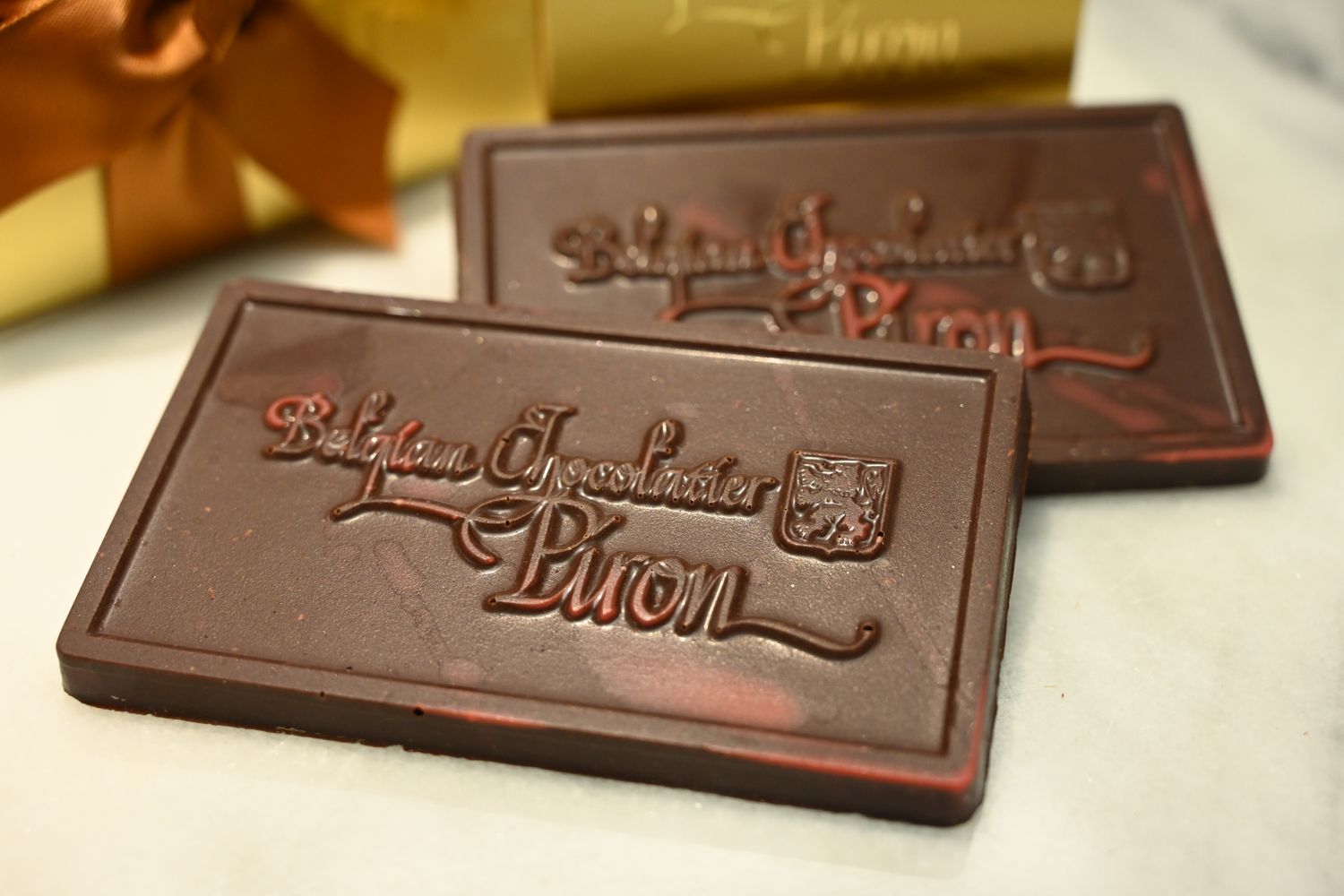
Belgian chocolate comes in many forms, and the names can be confusing when you are deciding what to order. The main types of Belgian chocolate include pralines, truffles, ganache-filled chocolates, Manons, gianduja creations, and Belgian sea shells chocolate. Each has its own filling, texture, shape, and place in Belgium’s chocolate tradition. At Belgian Chocolatier Piron, four decades of chocolatier experience have shown that understanding these differences makes choosing chocolate far more enjoyable.
A praline is generally a filled Belgian chocolate with a molded or coated shell, while a truffle is known for its soft center and rounded appearance. Ganache is a creamy chocolate filling rather than a chocolate category on its own, and a Manon is a distinctive Belgian praline traditionally made with white chocolate, coffee buttercream, and a walnut. Once you know these basics, a chocolate counter becomes much easier to read.
Why Belgian Chocolate Names Can Be Confusing
Chocolate terminology changes from one country to another. A word that describes one type of confection in Belgium may mean something entirely different elsewhere. This is especially true for the word “praline.”
In Belgian chocolate making, a praline usually refers to a chocolate shell filled with another preparation, such as ganache, buttercream, caramel, fruit filling, gianduja, or praliné. The filling is often the defining feature, while the shell gives the piece its structure and appearance.
Traditional Belgian chocolatiers have developed an enormous variety of shapes and fillings over generations. A single assortment may include molded hearts, domes, shells, squares, and other forms, each containing something different. That variety is one reason Belgian chocolate assortments are designed to be sampled piece by piece rather than treated as one uniform product.
What Is a Belgian Praline?
A Belgian praline is a piece of chocolate with a shell surrounding a filling. The shell may be made from dark, milk, or white chocolate, while the interior can range from smooth and creamy to nutty or slightly crunchy.
The first Belgian pralines were developed around the idea of enclosing a delicate filling inside a chocolate shell. This made it possible to combine contrasting textures in one bite. A thin chocolate exterior can give way to silky ganache, soft buttercream, flowing caramel, or a nut-based center.
Common praline fillings include:
- Ganache made with chocolate and cream
- Praliné made from caramelized nuts
- Buttercream flavored with coffee, vanilla, or liqueurs
- Caramel, fruit, marzipan, and gianduja
The word is broad enough to cover many individual chocolates in a Belgian assortment. A Manon, for example, is generally considered a type of Belgian praline because it combines an outer chocolate layer with a distinctive filling.
Praline vs Truffle: What Is the Difference?
The praline vs truffle question is one of the most common sources of confusion for chocolate buyers. Both are chocolate confections, but their structure and traditional style are different.
| Feature | Belgian Praline | Chocolate Truffle |
|---|---|---|
| Basic structure | Chocolate shell with filling | Soft chocolate center, often coated |
| Shape | Many shapes and designs | Usually round or irregular |
| Outer layer | Molded or enrobed chocolate | Cocoa powder, chocolate, nuts, or other coating |
| Filling | Ganache, praliné, caramel, buttercream, and more | Usually ganache or a similarly soft center |
| Texture | Often combines shell and filling | Usually softer and richer throughout |
The simplest explanation of the difference between praline and truffle is that a praline is typically built around a shell and filling, while a truffle is traditionally built around a soft center.
Of course, modern chocolate making creates overlap. Some truffles have thin chocolate coatings, and some pralines contain ganache centers similar to those used in truffles. The distinction is based more on structure and confectionery tradition than on a single ingredient.
What Is Ganache?
For anyone asking what is ganache, the answer is wonderfully simple: ganache is a smooth mixture made primarily from chocolate and cream.
Warm cream is combined with chocolate, creating an emulsion that can be soft, creamy, firm, or pourable depending on the proportions and temperature. Additional ingredients such as butter, vanilla, coffee, fruit purée, spices, or liqueurs may be added for flavor.
Ganache is not necessarily a finished chocolate piece. It is often the filling inside a praline or the center of a truffle.
A soft ganache gives a chocolate a melting texture. A firmer ganache can be shaped, cut, or rolled before being coated. Dark chocolate ganache usually has a deeper cocoa character, while milk and white chocolate ganaches tend to taste sweeter and creamier.
For chocolatiers, ganache is one of the foundations of fine filled chocolates because it provides both texture and a wide canvas for flavor.
What Is a Manon?
The question what is a manon deserves special attention because this classic Belgian chocolate is often overlooked outside Belgium.
A Manon is a traditional Belgian praline known for its pale appearance and luxurious filling. The classic version usually features a white chocolate coating, coffee-flavored buttercream, a layer of nougatine or praliné, and a whole walnut placed on top.
The exact recipe can vary among chocolatiers. Some versions emphasize coffee buttercream, while others include a richer nut filling or use a different balance between the layers. What makes the Manon recognizable is its combination of creamy coffee flavor, sweetness, nuttiness, and decorative walnut.
A well-made Manon offers several textures in one bite. The outer chocolate gives a gentle snap, followed by soft buttercream and a contrasting nut-based layer. The walnut adds a final earthy note that keeps the sweetness from becoming one-dimensional.
Manons are especially memorable because they look different from many dark or milk chocolate pralines. Their lighter color and visible walnut make them easy to identify in a traditional Belgian assortment.
What Is Gianduja?
Another term that appears frequently in European chocolate is what is gianduja.
Gianduja is a smooth blend of chocolate and finely ground hazelnuts, traditionally associated with Italian confectionery but widely used in Belgian chocolate making. The texture is creamy and rich, with the roasted flavor of hazelnuts playing a central role.
It differs from ordinary chocolate because the nut paste changes both the flavor and consistency. Gianduja can be used as a filling, layered inside pralines, shaped into confectionery pieces, or combined with other ingredients.
Its flavor sits somewhere between chocolate and nut spread, although high-quality gianduja has a more pronounced chocolate character and a smoother confectionery texture.
Hazelnut lovers often gravitate toward gianduja-filled chocolates because the roasted nuts bring warmth and depth to milk or dark chocolate.
Belgian Sea Shells Chocolate and Fruits de Mer
One of the most recognizable forms in a Belgian chocolate assortment is Belgian sea shells chocolate, often associated with the French term Fruits de Mer, meaning “fruits of the sea.”
These chocolates are shaped like seashells, seahorses, clams, and other marine forms. Their appearance makes them instantly recognizable, but the filling is just as important.
Traditional sea shell chocolates are often made with a marbled blend of dark, milk, and white chocolate surrounding a smooth hazelnut praliné center. The result combines creamy chocolate with a rich nut filling and a gentle roasted flavor.
The decorative shell shape is more than a novelty. It reflects the artistry that has long been part of Belgian chocolate making. Molds allow chocolatiers to create detailed pieces while maintaining the delicate balance between shell thickness and filling.
At Belgian Chocolatier Piron, familiar Belgian classics such as Manons, truffles, and Fruits de Mer reflect the pleasure of choosing chocolates with distinct textures and personalities rather than receiving the same piece repeatedly.
What Is a Ballotin?
For visitors buying an assortment, another useful question is what is a ballotin?
A ballotin is the traditional box used to present and protect Belgian chocolates. It is usually a folded cardboard box designed to hold an assortment of pralines neatly in place.
The ballotin became an important part of Belgian chocolate culture because delicate filled chocolates needed better protection than a simple paper bag could provide. A carefully packed box also turned an assortment into a gift.
Today, the ballotin remains strongly associated with Belgian chocolateries. Opening one is part of the experience. The arrangement reveals different shapes, colors, and fillings, inviting the recipient to choose based on appearance or preference.
A ballotin is not itself a type of chocolate. It is the presentation box that may contain pralines, truffles, Manons, sea shells, and other chocolate creations.
How to Choose Between Pralines, Truffles, Manons, and Sea Shells
Choosing Belgian chocolate becomes easier once you think about texture and flavor rather than only appearance.
For a smooth, structured chocolate with a variety of fillings, pralines are a natural choice. They offer the greatest range within a single category because the shell can contain almost anything a chocolatier can prepare successfully.
For a soft and rich experience, truffles are often the preferred option. Their centers are generally creamy and intensely chocolate-focused.
For coffee and nut flavors, a Manon offers a more distinctive traditional profile. Its buttercream and walnut combination makes it very different from a standard ganache-filled chocolate.
For hazelnut lovers, gianduja and Belgian sea shell chocolates provide a creamy roasted character. Sea shells also make an attractive gift because of their distinctive shapes and marbled chocolate appearance.
A mixed ballotin can be the best choice for someone who wants to understand Belgian chocolate through tasting. Sampling different pieces side by side makes the contrasts between ganache, praliné, buttercream, and gianduja much easier to appreciate.
The Craft Behind Different Belgian Chocolate Fillings
The quality of a filled chocolate depends on more than its ingredients. Texture, temperature, shell thickness, freshness, and balance all affect the final result.
A chocolate shell that is too thick can overwhelm a delicate filling. A shell that is too thin may not provide enough structure. Ganache must be smooth without becoming greasy, while buttercream needs enough body to hold its shape.
Nut fillings require careful handling as well. Roasting changes the flavor of hazelnuts and almonds, bringing out deeper aromas. Grinding them too coarsely can create an unwanted texture, while grinding them correctly produces the smoothness associated with traditional praliné and gianduja.
This attention to small details explains why two chocolates with similar ingredients can taste very different. A classic recipe still leaves room for a chocolatier’s judgment.
FAQ About Belgian Chocolate Types
What is the difference between praline and truffle?
A praline usually has a defined chocolate shell surrounding a filling such as ganache, caramel, praliné, or buttercream. A truffle is traditionally centered around a soft, rich filling and is often rolled or coated rather than molded into a detailed shell.
Is ganache the same as a truffle?
No. Ganache is a mixture of chocolate and cream used as a filling or center. A truffle is a finished chocolate confection that often contains ganache.
What is a Manon chocolate made of?
A traditional Manon is made with white chocolate, coffee-flavored buttercream, a nut-based layer such as praliné or nougatine, and a walnut on top. Recipes can vary between chocolatiers.
What is a ballotin used for?
A ballotin is a traditional Belgian box used to package and present an assortment of chocolates, especially pralines.
Are Belgian sea shell chocolates filled with chocolate?
Belgian sea shell chocolates commonly have a smooth hazelnut praliné filling surrounded by marbled milk, dark, and white chocolate. Recipes can differ depending on the chocolatier.
What is gianduja in Belgian chocolate?
Gianduja is a smooth mixture of chocolate and finely ground hazelnuts. It is often used as a creamy filling in pralines and other chocolate confections.
A Better Way to Enjoy Belgian Chocolate
Understanding these names changes the experience of buying an assortment. Instead of choosing only by shape or chocolate color, you can choose based on the kind of filling and texture you enjoy most.
Pralines offer variety, truffles focus on soft richness, ganache provides a creamy foundation, and Manons bring together coffee, nuts, and buttercream in a distinctly Belgian creation. Gianduja adds roasted hazelnut character, while Belgian sea shells combine recognizable shapes with smooth praliné centers. The ballotin brings these different pieces together in the traditional style of Belgian chocolate gifting.
The next time you open a box of Belgian chocolates, take a moment to notice the craftsmanship behind each piece. Visit Us Now to experience these classic creations with a clearer understanding of what makes each one distinct.
A good chocolate assortment is not meant to be rushed. Taste one piece at a time, notice the shell, filling, aroma, and texture, and enjoy the small differences that have kept Belgian chocolate traditions appreciated for generations.